
Planning a paint job in the Salt Lake City area? Quotes, timelines, and even the type of paint can look completely different depending on whether you’re freshening up your living room or getting a warehouse, office, or retail space ready. Residential painting services cover homes and focus on aesthetics, family schedules, and living-space paints, typically finishing an average Salt Lake City house in 3–7 days with smaller crews.
Commercial painting services cover offices, retail, warehouses and similar buildings; they use more durable industrial coatings, larger crews or night and weekend shifts to limit business downtime, extra surface prep, and stricter safety and building-code compliance, often completing far more square footage in a comparable or shorter calendar window.
The biggest practical differences we see on our Salt Lake City jobs are scale, disruption rules, coating durability, and regulatory extra steps such as lead-safe work on older homes.
What Is Commercial Painting?
Commercial painting is the work we do on businesses, warehouses, offices, retail spaces, and similar buildings. The goal is usually durability, fast turnaround, and keeping the business running (or getting it open) with as little downtime as possible. Coatings have to stand up to forklifts, frequent cleaning, foot traffic, and temperature swings common in Utah’s dry climate. Prep is often more about covering large, sometimes rough surfaces quickly and meeting building-code or insurance requirements than matching a living-room accent wall.
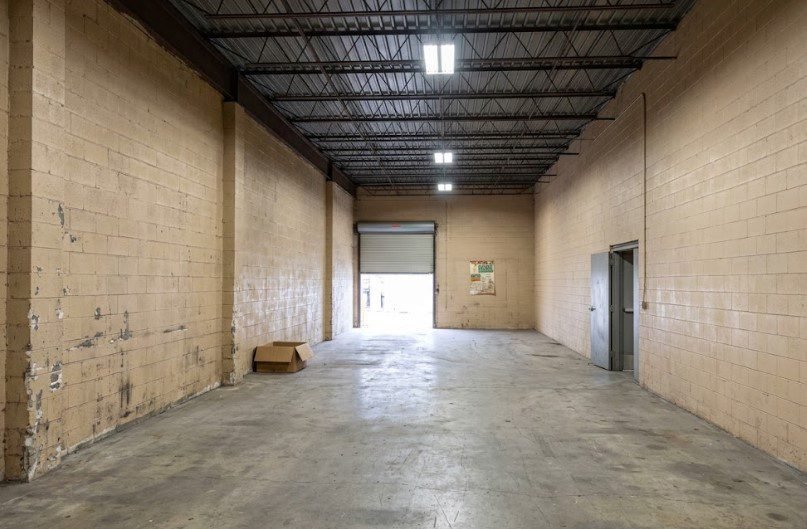
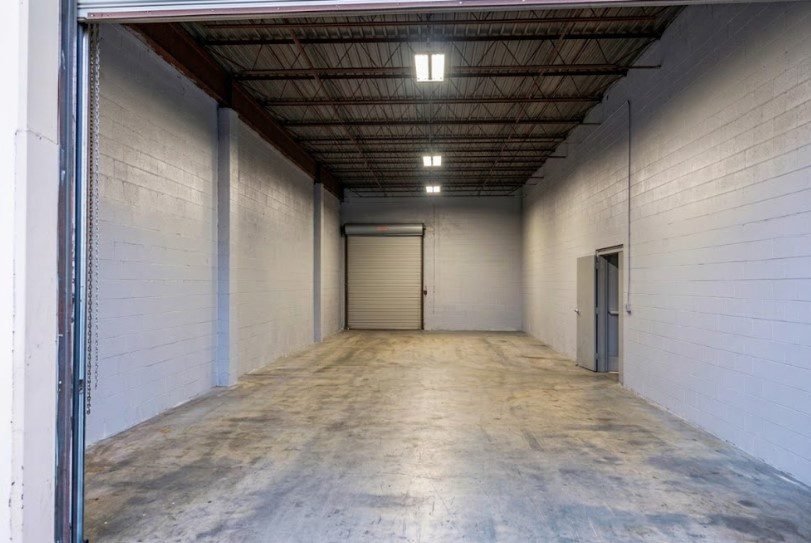
Look at the warehouse we finished in June 2025. It was an empty 9,200-square-foot industrial space with cinder-block walls, high ceilings, and a roll-up door. The existing beige paint was peeling in spots and the floor showed years of use. Our five-person crew used airless sprayers to apply a more durable masonry-grade coating in a light gray that reflects light and hides dust.
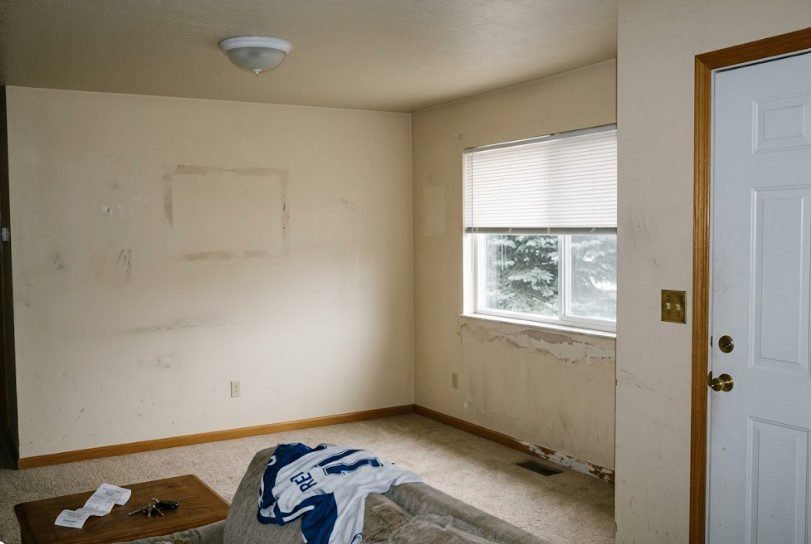
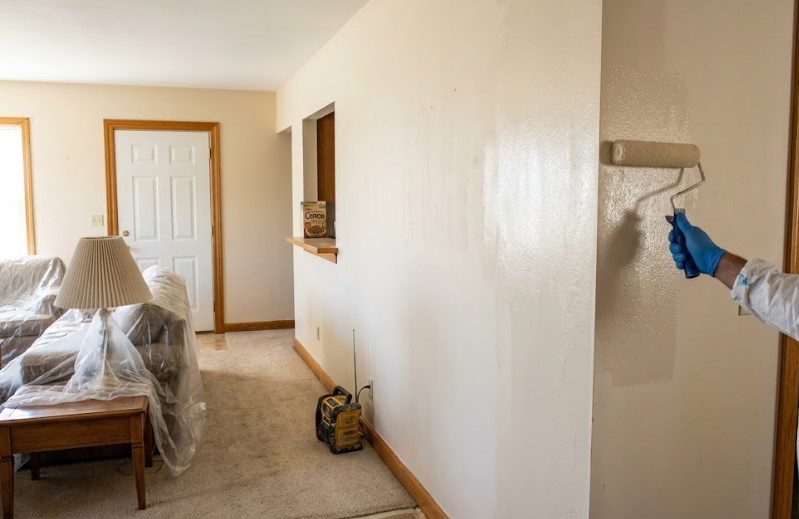
Compare that to the residential job we wrapped in March 2025. A family in a 1970s Salt Lake City ranch needed their living room and adjacent spaces painted. Walls had water staining and peeling around a window, old patches, and years of wear.
We were working inside an occupied home, so everything had to be protected and the family needed to keep using the space.
Scale, Prep, and Why the Work Feels Different
The most obvious difference is size. That warehouse had more wall area than four average Salt Lake homes combined, yet we finished it faster than the house because we could spray large, open surfaces.
On the home we used rollers and brushes for cut-in work around trim, outlets, and the window. Residential jobs almost always involve more detailed patching, sanding, and color matching so the finish looks like it belongs in a lived-in space.
Prep tells the same story. In the house we spent the first day and a half scraping loose paint, filling cracks, priming water-damaged spots, and covering every piece of furniture.
On the warehouse we still prepped—power-washed some areas, filled a few holes, and masked the overhead door—but the surfaces were more uniform. We could move faster because there were no family photos, no “keep this room usable tonight,” and no need to match an existing interior palette.
Materials, Durability, and What Holds Up in Utah
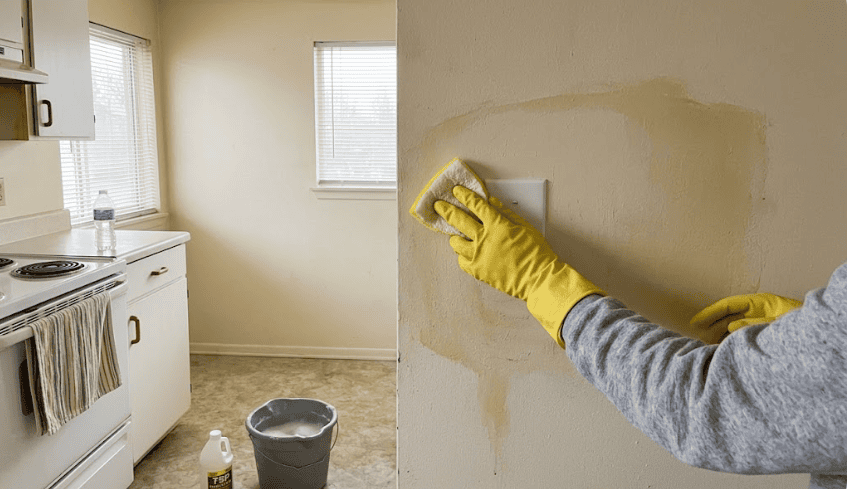
We don’t use the same products. For the home we chose a quality interior latex in an eggshell sheen—easy to clean, low odor, and formulated for living spaces. The paint can and roller in the photo below came from that job. It looks great and will last years with normal household wear.
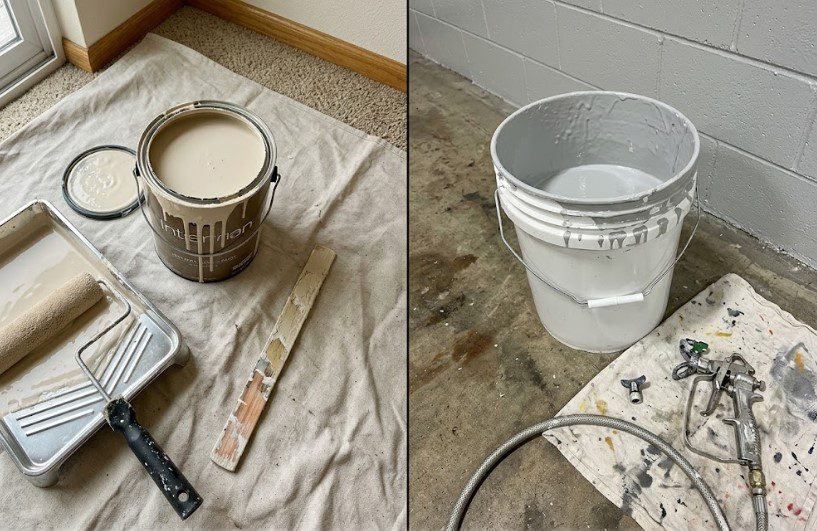
On the warehouse we switched to a more durable, higher-build coating designed for masonry and high-traffic commercial interiors. It needs to handle temperature swings, occasional moisture, and cleaning with stronger products. Utah’s dry air and big seasonal temperature changes make this extra important—paint that works in a climate-controlled house can fail faster on an unconditioned warehouse wall.
Crew size and equipment follow the same split. The house used a three-person crew with rollers, brushes, and a small sprayer for the ceiling. The warehouse needed a five-person crew, full airless sprayers, and more drop cloths and plastic because overspray on a large job is a real issue. We also brought extra lighting and a radio that could be heard over the compressor.
Timeline, Disruption, and the Rules That Change Everything
A typical Salt Lake City residential interior like the one we did runs 4–7 days. The family stays in the house, so we sequence rooms, keep paths clear, and often work 8 a.m. to 4 p.m. so evenings stay usable. The warehouse, even though it was larger, took only four calendar days because we could spray continuously and the space was empty. When a business is still operating we shift to nights or weekends—something we almost never do on homes.
The homeowner on the March job told us the biggest relief was that we finished without turning their house into a construction zone for two weeks. The warehouse owner’s comment was simpler: “It looks like a new building and we didn’t lose a single day of potential rent.” Those two reactions pretty much sum up the difference.
Commercial and Residential Painters: Do You Need a Specialist?
A company that does both, like ours, can be the right fit when you have mixed needs (a live-work property, a property manager handling apartments and a small office, or a homeowner who also owns a shop). We already know the local climate, the typical 1950s–1970s housing stock versus newer commercial construction, and which coatings hold up. Specialists can be faster on one type of work, but they sometimes miss the nuances of the other. We’ve had homeowners ask us to paint their office after seeing the house, and warehouse managers who later hired us for their own homes.
When you’re comparing quotes, ask these questions: How many similar jobs have you done in the last year in Salt Lake City? What’s the crew size and expected calendar days? Do you have the right certifications (RRP for older homes, extra insurance for commercial)? Can I see photos of a job like mine, not stock pictures? Get everything in writing—especially how they will handle occupied spaces or after-hours work.
We’ve found that the biggest surprise for most clients is how much the prep and scheduling change the price even when the square footage looks similar. A 2,000-square-foot house with lots of patching and an occupied family can cost more per square foot than a 10,000-square-foot empty warehouse we can spray.
The difference between residential and commercial painting services isn’t just bigger walls or different paint. It’s how we protect a family’s daily life versus how we keep a business moving, the coatings that survive Utah weather and use, the extra safety steps on older homes, and the crew and schedule that match the space. Those two Salt Lake City jobs show the gap better than any list. If you’re comparing painters, look for someone who’s actually done both in this climate and can show you the photos and the dates. That’s how you avoid surprises.