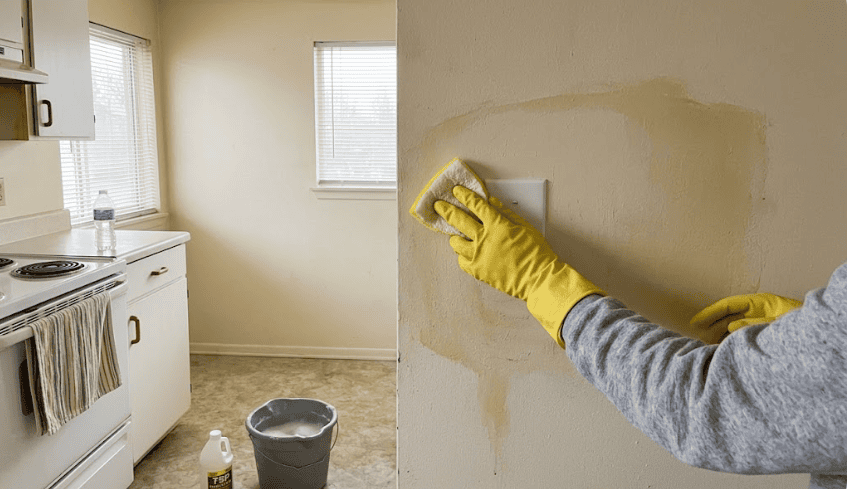

Most Salt Lake City homeowners who call us have already picked a color and want to know how soon we can start. The question that actually decides whether the new paint lasts is simpler: should I wash my walls before painting?
Yes, you should wash your walls before painting in almost every occupied home. Dust, cooking grease, and hand oils, keep new paint from bonding and make sheen look patchy. On occupied Salt Lake City interiors, Swift Hand Painting washes walls with a TSP substitute or mild detergent, rinses, and lets them dry fully before primer. Skipping the wash is the most common reason we see peeling, flashing, or stains coming through in kitchens, hallways, and kids’ rooms. Last year we washed walls on 42 of the 48 occupied interiors we painted.
The Kitchen That Made the Difference Obvious
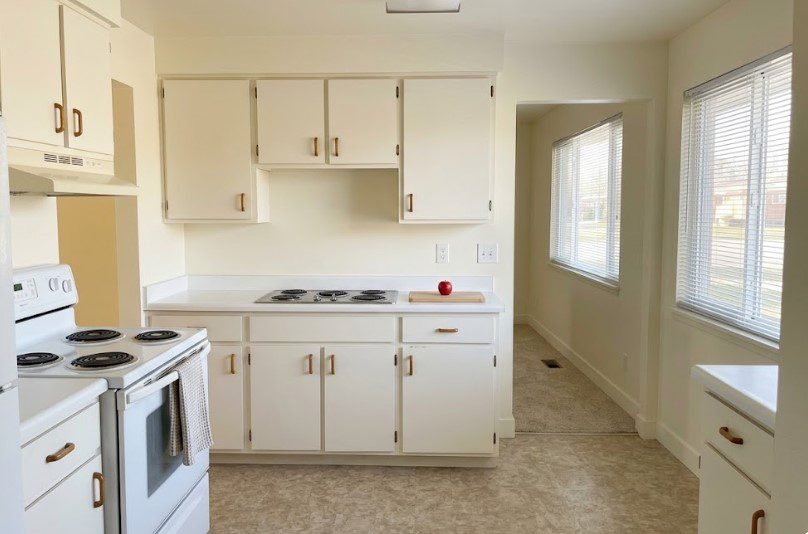
We painted this kitchen and the short hallway off it in May 2026. The house is a 1970s rambler in Taylorsville. The family had lived there eight years and the walls hadn’t been painted in at least that long. They were still using the kitchen every day, so we worked around meals and kept the space usable each evening.
The walls looked “just old” at first glance—faded beige, a few scuffs. Once we got the furniture pulled and the light on them, the real condition showed up.
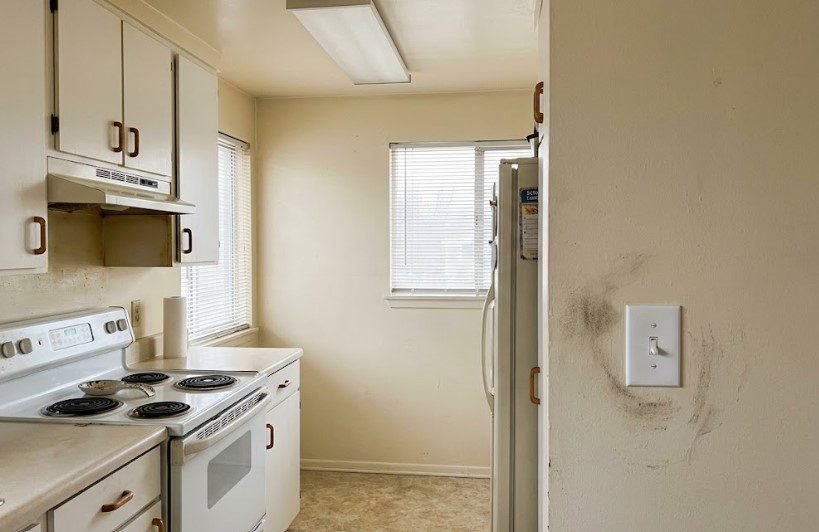
Cooking grease had built a thin, sticky film from the range hood down to the counter. Hand oils darkened the wall around the light switch and the doorway. There was ordinary household dust on the upper walls and a faint yellowing that often comes with age and cooking. Nothing dramatic like crayon or heavy nicotine, but enough that a roller would have skated over it instead of grabbing.
When You Must Wash vs. When a Wipe Is Enough
Kitchens, bathrooms, kids’ hallways, and any wall with a light switch or door frame almost always need a real wash. Those surfaces collect oils and grease that a damp rag just smears. Living rooms and bedrooms that have been kept reasonably clean can often get a thorough damp wipe with a microfiber cloth, especially if the last paint job is still sound. The only time we skip washing altogether is brand-new drywall that has never been lived in—and even then we vacuum and wipe the sanding dust.
In this house the kitchen and hallway got the full wash. The adjacent living room, which had less traffic and no cooking, got a careful damp wipe. That split is typical of the occupied Salt Lake City interiors we see.
How We Actually Wash Walls Before Painting
We use a TSP substitute (the same type of product in the photo) mixed per the label, usually ½ cup per gallon of warm water. A sponge or microfiber pad, not a dripping mop. We work in small sections, rinse immediately with clean water so no soap film dries on the wall, then let everything dry. In a heated house in October that took about four hours; in a cold room in January it can take overnight.
We never soak the drywall—Utah’s dry climate already stresses the paper face—and we never paint over leftover cleaner. Salt Lake’s hard water makes the rinse step extra important; leftover minerals can cause fisheyes later.
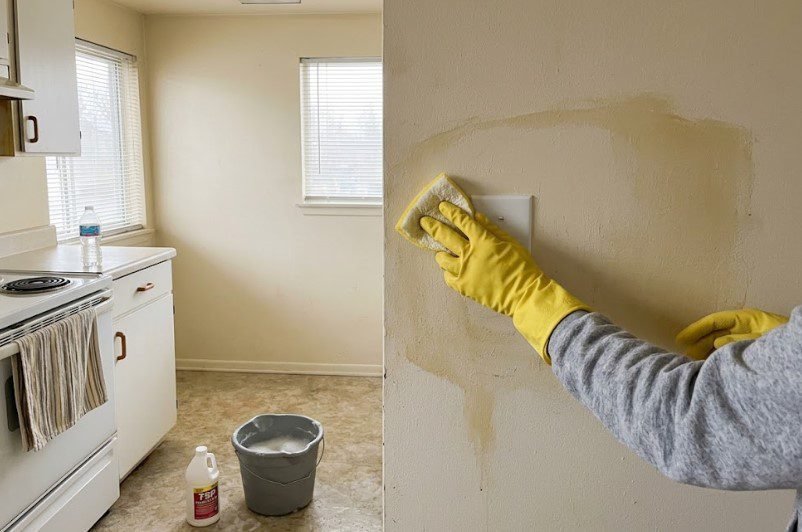
The wash itself added roughly two hours of labor on this kitchen, plus the dry time before we could prime. That is standard and already built into our interior quotes.
The Sequence We Follow After the Wash
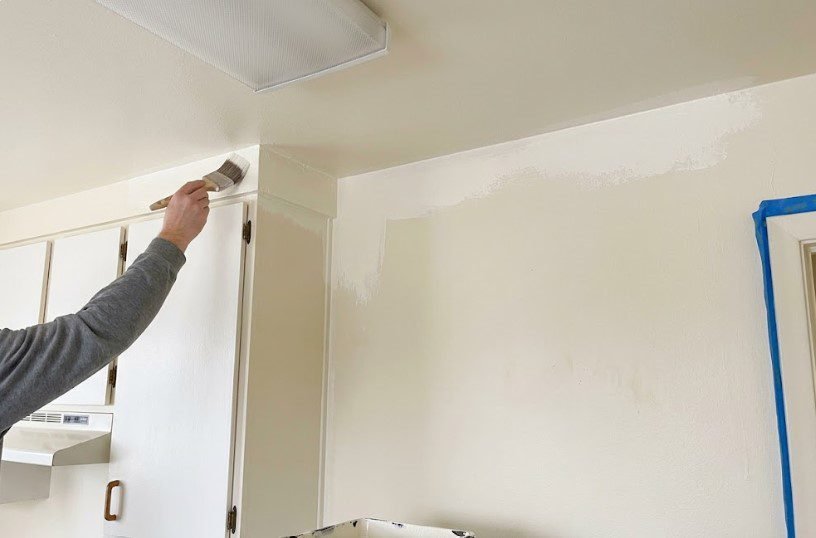
Once the walls are clean and fully dry they look dull and slightly chalky—that’s what we want. Next we caulk gaps, fill nail holes and cracks, sand the patches, and wipe the sanding dust. Then primer (we used a stain-blocking primer on the kitchen because of the old grease) and two coats of quality interior latex. Skipping any of those steps after a good wash still causes problems, but the wash is what makes the rest of the work stick.
What Fails When You Skip the Wash
We have been hired more than once to fix kitchens where the previous painter (or the homeowner) skipped washing. The classic failures are peeling along the stove wall, patchy sheen that looks like the paint “flashed,” and small craters (fisheyes) where grease prevented the new film from leveling.
On one job in Murray a homeowner had painted over cooking film; six months later the new paint was coming off in sheets around the range. We had to strip it, wash properly, prime, and repaint. That extra work cost more than doing it right the first time.
What’s Included When You Hire Swift Hand Painting
Every interior painting quote we give in Salt Lake City already includes washing the walls that need it, the rinse, the dry time, and the rest of the prep. We do not add it as a surprise line item. Crew size on this kitchen was two painters; total time from first wash to final coat was three days because the family was living there. We protect floors and remaining furniture, keep paths open, and leave the kitchen usable each night.
If you are deciding whether to wash your walls before painting, the short answer for an occupied Salt Lake City home is yes—especially in the kitchen, hallway, and anywhere hands or cooking touch the walls. A damp wipe is enough only on cleaner, lower-traffic rooms. Brand-new drywall is the rare skip. The extra time is small compared with the peeling and patchy sheen you get when you don’t do it.
We have already done this exact sequence on dozens of local interiors this year. If you want us to look at your walls, tell us the rooms and we’ll tell you exactly what they need.