
Paint chips when the film loses adhesion to the surface or to the layer under it. On Salt Lake City houses we work on, the chips we see most often come from three things: moisture behind the film, painting over an unsound or chalky previous coat, and a new coat that doesn’t bond to what’s underneath.
How to Read a Chip
Pick up a flake and look at the back of it and what’s left on the wall. Bare wood or masonry showing means the paint never really bonded or water got behind it. A different color of old paint on the back of the flake means the previous coat failed and took the new one with it. Primer showing in the scar usually points to an intercoat adhesion problem.
Location on the house tells you even more:
Clusters near windows, gutters, grade, or a hose bib are almost always moisture.
South- and west-facing walls that bake in full sun all afternoon often show brittle chips rather than big peels. Interior chips around light switches, door frames, kitchens, or kids’ hallways usually mean oils, grease, or skipped washing and sanding.
Blisters under the film are moisture or solvent trying to escape.
Peeling in sheets is the whole system letting go.
Chipping is the film getting brittle and breaking.
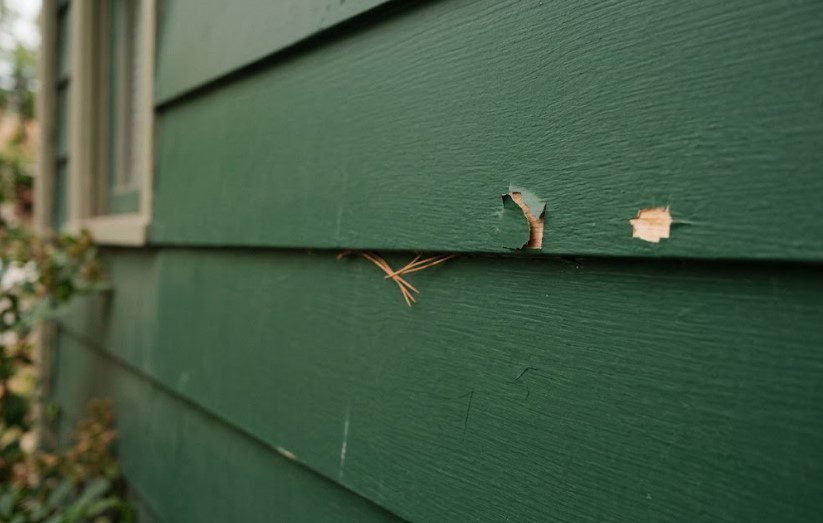
We use a simple scrape test, a tape-adhesion test, and a moisture meter on the job. Those three things usually tell us whether we can feather the edge and recast or whether the whole elevation has to come back to sound material.
Moisture: The Millcreek House Where Water Was Doing the Damage
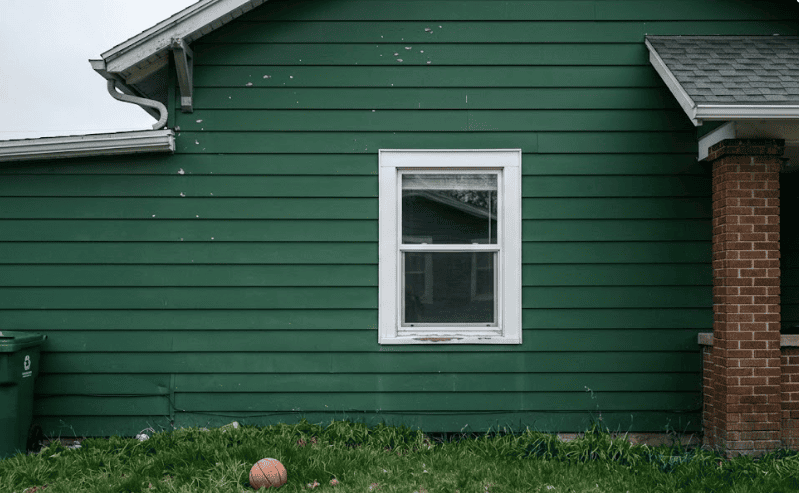
We got the call in June 2026. The homeowner on this 1950s wood-sided bungalow in Millcreek thought the green paint was just old and starting to fade. They had noticed a few chips after winter but figured a little caulk and touch-up would take care of it.
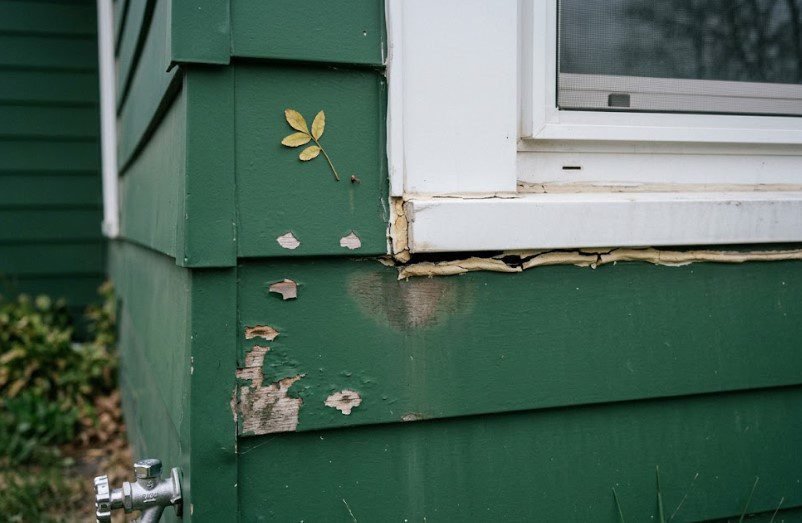
On the walkaround the peeling was concentrated along the window and the lower courses of siding. Failed caulk had let water in around the window frame. Irrigation overspray kept the bottom wet. A few spots already felt soft.
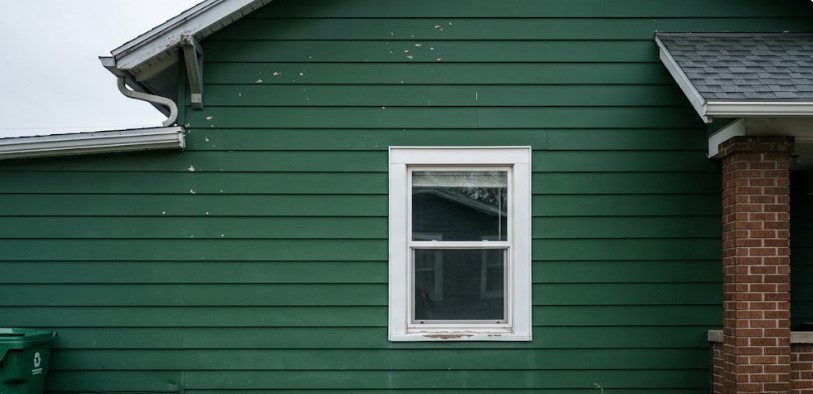
The scrape test lifted large pieces with wood showing. The moisture meter read 17–19 % next to the window and along the bottom versus 8 % on the dry side of the same wall. That’s the number that decides whether you paint or you fix the water first.
Root cause: chronic moisture from failed window caulk and daily irrigation overspray, made worse by freeze-thaw.
We scraped every failing area back to a feathered sound edge, replaced a couple of damaged siding pieces, installed new backer rod and polyurethane caulk, and primed with a bonding primer formulated for weathered wood. Two coats of 100 % acrylic exterior latex went on at the spread rate the manufacturer actually requires for this climate. We also had the homeowner move the sprinkler heads so they no longer hit the siding.
We contacted the homeowner at the time of writing and same elevation is still tight. No new chips, no blisters. That’s what happens when you stop the water before you put new paint on.
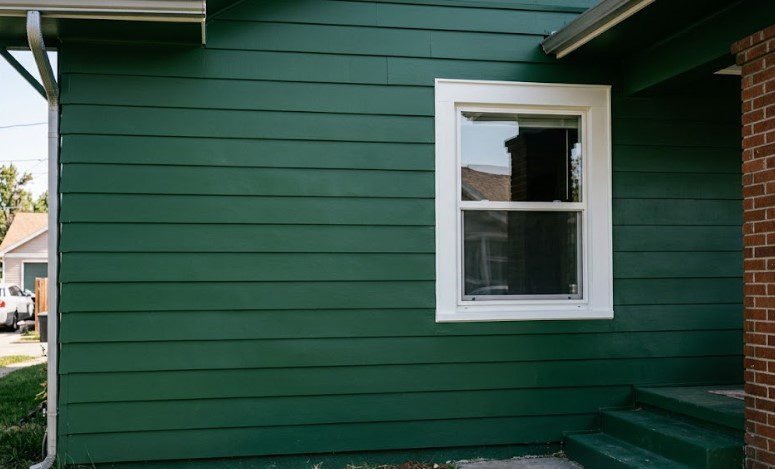
Exterior paint chipping like this is almost never “just the paint.” If the flake shows bare wood, the water path has to be closed first.
Unsound Old Coating: Paint Chipping on Walls in an Avenues Interior
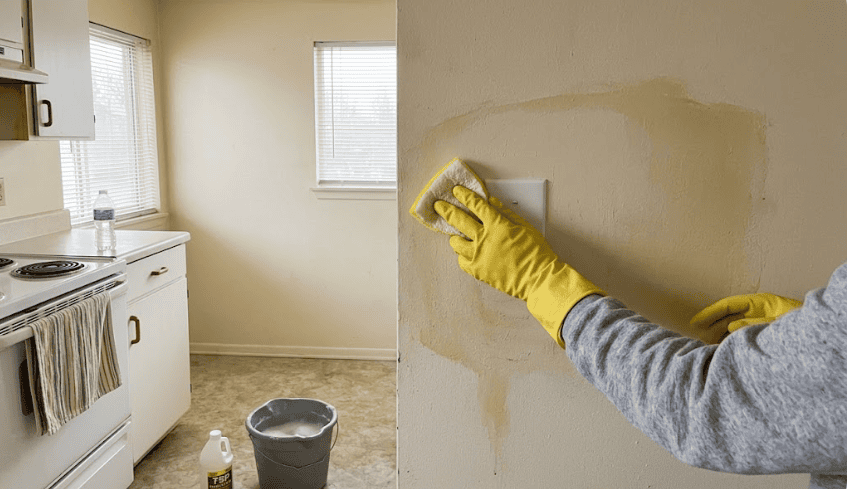
In the house below, the homeowner had hired someone two years earlier who “just painted over what was there.” Now the stairwell and hallway were chipping and the previous beige was showing in every flake.
The walls looked okay from across the room until you got close. High-traffic zones around the handrail, light switches, and door trim were letting go in sheets.
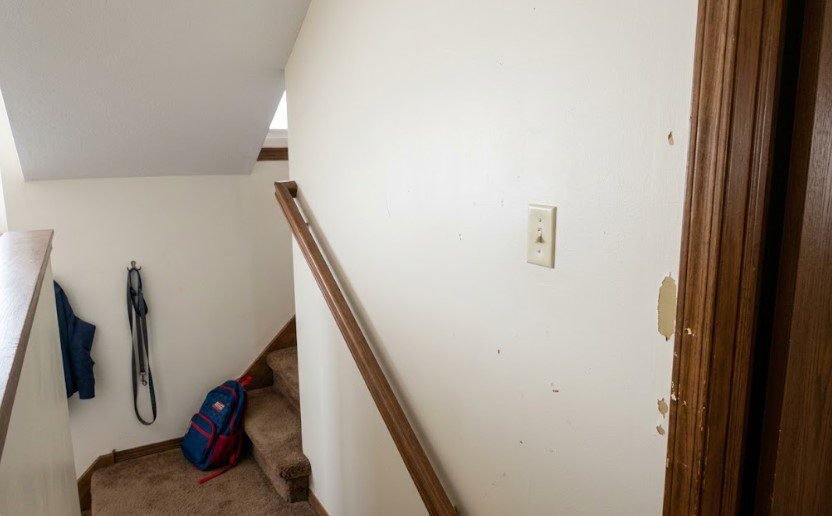
Tape test pulled off two-inch pieces. A solvent wipe confirmed the old film was a hard enamel that the new latex had never bonded to. Classic skipped-prep job.
Root cause: painting over an unsound, glossy previous coat without washing, sanding, or a bonding primer.
We scraped everything that was loose (more than the homeowner expected), sanded the remaining film to dull it, washed the walls, and used a high-adhesion bonding primer before two coats of interior latex. The extra prep added a day, but that’s the only way the new paint stays on.
This is the most common interior call we get: “It looked fine when they left, and now it’s chipping.” One more coat over failed paint never lasts.
Sun and Brittle Film: Exterior Paint Chipping on a South Wall in West Jordan
A newer fiber-cement home in West Jordan. The south elevation was showing small, hard chips rather than big peels. The rest of the house still looked decent.
The chips snapped instead of peeling in sheets. South wall, full afternoon sun, high-altitude UV. The film had become brittle.
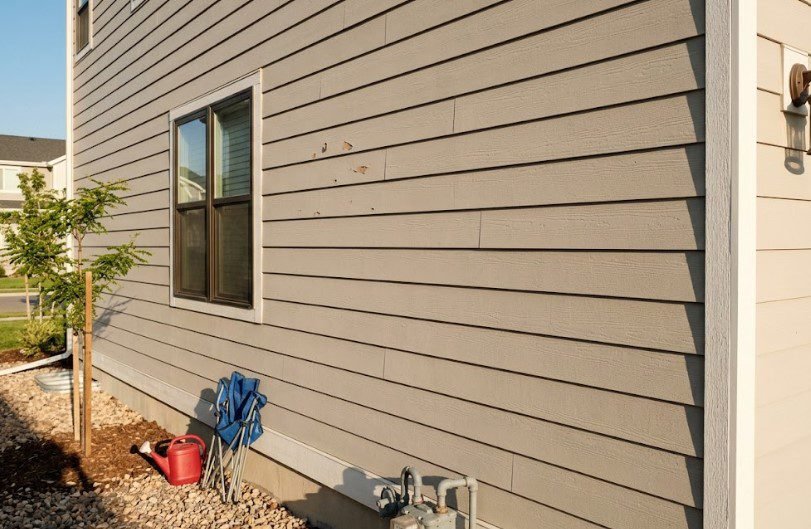
We ran the same scrape and tape tests. Adhesion was poor only on the sun side. No moisture. The original coating had simply cooked.
Root cause: high-altitude UV and heat on the south wall turning the film brittle, plus insufficient UV-resistant formulation for our elevation.
We sanded the failing areas, applied a primer rated for fiber cement and UV, and recoated with a premium exterior acrylic that holds up better at 4,200 feet. The north and east walls needed almost nothing.
Utah’s dry air and intense sun make this pattern more common than people expect, especially on newer south-valley homes.
Can You Paint Over It?
Only if the remaining film is sound, clean, and de-glossed, and the chips are truly isolated. If the flake shows bare substrate or the coating sheets off when you scrape, it all has to come off to a sound, feathered edge. Painting over failed paint is the fastest way to have the same call again in 12–18 months.
On the Millcreek house we refused to paint until the water was stopped. On the Avenues interior we took it back further than the homeowner wanted because the tape test failed. That’s the difference between a lasting job and a temporary cover-up.
What a Lasting Fix Actually Includes
Find the water (or the sun, or the contamination) first. Take every failing area back to a sound, feathered edge. Prime for both the substrate and whatever old coating is left. Recaulk, flash, or move the sprinklers if that’s what the wall needs. Then coat at the spread rate the product actually requires, not whatever gets you off the job faster.
That’s the system we used on all three of these houses. It’s also what we put in every exterior house painting quote in Salt Lake City and every interior painting estimate.
The homeowner on the Millcreek job said the biggest surprise was how much of the “paint problem” was actually a water problem. That’s the comment I hear most. People paint over chips because the rest of the wall still looks fine. It never lasts.
When to Call vs. DIY
An isolated chip on otherwise sound, well-adhered paint can sometimes be feathered and touched up. A whole wall, an elevation that’s letting go, any moisture or rot, or pre-1978 scraping is a painter’s job. If you’re seeing new chips every season, the system has already failed.
We look at 30–40 chipping calls a year in the Salt Lake Valley. Roughly half are moisture, a third are skipped prep or unsound old paint, and the rest are sun or coating mismatch. The test is always the same: what’s on the back of the flake and what’s left on the wall.
If you want us to look at the actual chips on your house, send photos or have us walk it. We’ll tell you whether it’s a touch-up or a system failure before anyone opens a can.
The chips are telling you something. On these three Salt Lake City jobs they were telling us moisture, bad prep, and UV. Once you know which one you’re looking at, the fix is obvious.