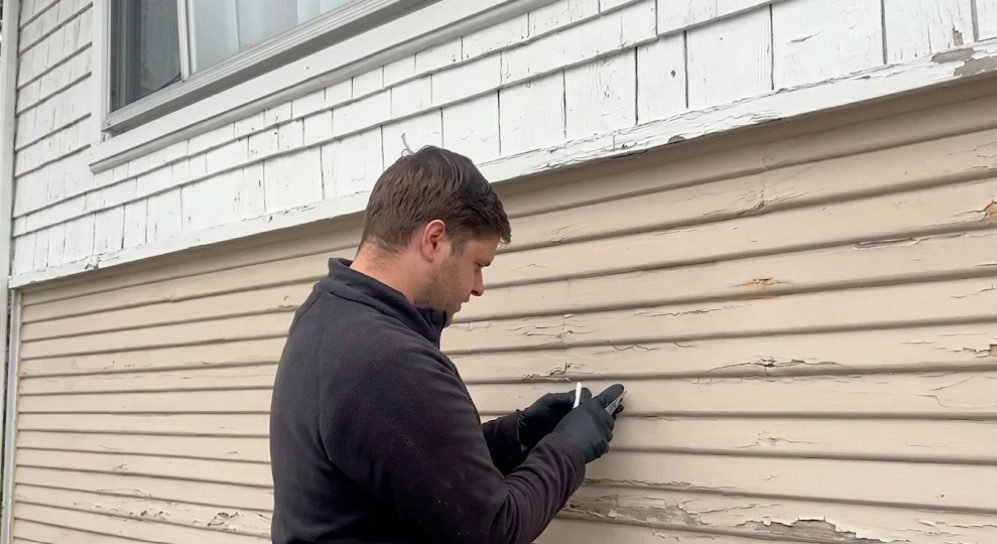

A lead paint test on a real job takes about a minute. We cut a small V through the paint down to bare wood, activate a swab, and hold it on that cut for 30 seconds. If the tip turns red, there’s lead in one of those coats, and the way we prep the house changes from that moment on.
Our lead painter, Daniel Black, runs this test before anyone scrapes an older house in the Salt Lake Valley. He filmed a few on real jobs so homeowners can see one done.
The first of those was an older home in Holladay that was about to get a full exterior repaint, and Daniel tested the painted wood before any prep started. Here he is running the full test on that house.
In the clip, he cuts into the paint, crushes both sides of the swab, gives it two shakes and holds it against the wood. It turns red almost right away, and he says it plainly: this house has lead.
We Test Before Anyone Picks Up a Scraper
Timing matters more than anything in how painters test for lead paint, and the method itself is simple. Old lead paint sitting under newer coats is one thing. Scraping and sanding are another, because they break that paint into chips and fine dust that land on sills, floors and soil.
So the test comes first, every time, on any pre-1978 house. Lead paint in older homes is often buried a few coats down, under paint that went on decades later.
A Small V Cut Lets the Swab Reach Every Coat
A wood window frame or a piece of trim on an older house can carry six or more coats. If you rub a swab on the top coat only, you’re checking the newest paint, which may be lead free even when older coats aren’t. That’s why testing lead paint layers takes a cut, not a wipe.
Daniel slices a shallow V through the paint down to the wood. The sides of that cut expose every coat at once, from the oldest at the bottom to the newest on top, so the swab touches all of them in one pass.
The lead paint test swab has two sealed parts inside. Crushing side A and then side B releases them, two shakes mix them, and the tip goes into the cut. Then he holds it there for 30 seconds and watches.
Red Means Lead, and It Shows Up Fast
On the Holladay house, the swab went red right away. A positive lead paint test looks like that: the swab tip or the cut turns pink to red.
A negative lead paint test is quieter. The tip simply stays the color it started, with no pink showing anywhere once the time runs out. Daniel reads lead paint swab test results right on the spot, so the homeowner knows the answer before we leave the driveway.
One House Can Give Two Different Answers
The windows and siding on a house in Murray gave two different answers, which is why we never test just one surface and call it done. Daniel swabbed both, and this close-up captures what he found.
As he says in the clip, the windows tested positive, the siding tested negative, and that means there’s lead on site.
Lead paint on wood windows often comes from the original coats, since window frames tend to stay put for the life of the house. The siding on this home was fiber cement, a newer material that was likely added long after lead paint was off the shelves. A lead test on fiber cement siding coming back clean tells you about the siding, and nothing more.
One clean surface doesn’t clear a house. Once any part tests positive, we treat the whole job as a lead job.
A Positive Result Changes How We Work
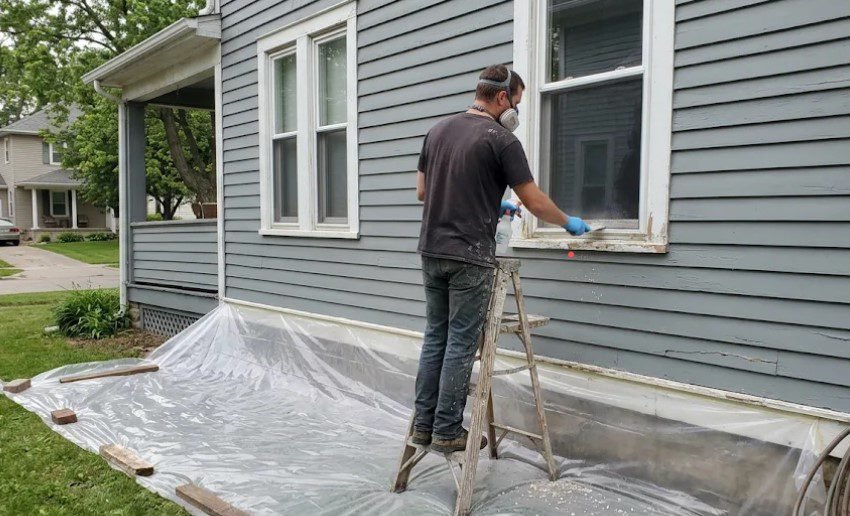
Once Daniel’s test came back positive, we didn’t start scraping. We set up a work area first, so the old paint stays on the house and out of your yard. Here’s what that looked like on this job:
- The plants around the house were covered, so paint chips and dust don’t land on them or in the soil.
- The windows were covered and closed, so dust stays out of the rooms inside.
- Plastic sheeting went down on the ground along the walls we were working on, so chips land on the sheeting and not in the beds or lawn.
- Doors and other openings near the work were sealed, so nothing blows indoors.
- We misted the old paint before scraping and never dry-sanded it, and all the work happened inside that covered area.
- Cleanup came before the paint did: we picked up chips and dust, then wiped every surface with damp cloths and vacuumed with a HEPA vacuum, so the surface was clean before primer went on.
We’re EPA RRP certified, and the full set of lead safe steps covers what that looks like from setup to final cleanup. On older homes, it’s built into our exterior repaint work from the first estimate.
A Swab Is a Quick Screen, Not a Lab Report
A swab shows whether lead is likely present in the spot you tested. It doesn’t measure how much, and it can’t speak for parts of the house you didn’t test. That’s why we test several surfaces and treat any positive as the answer for the whole job.
If you need a written lead report for a sale, a rental or a big remodel, that comes from a certified lead inspector, not a painter’s swab. For planning safe prep, though, a quick test is exactly what we need.
FAQ: Questions Homeowners Ask Us About Lead Testing
Does the test damage my trim?
Only a little. The cut is small and shallow, about the size of a fingernail. Since the area gets scraped, primed and painted during the job anyway, the mark disappears once the new coats go on.
Can I run the swab myself?
You can buy a home kit, and it gives a quick answer on one spot. What it can’t do is tell you how to prep safely afterward. We test several surfaces and plan the job around what we find.
Do you test inside the house too?
Yes, when we’re painting older trim, doors or window sills indoors. Interior work gets the same check before any sanding, since dust inside settles where kids play and pets lie down.
Does a positive result raise the price?
It can add time for setup, containment and cleanup. Our estimates list prep separately from painting, so you’ll see exactly what the extra care covers before you agree to anything.
How long does testing take?
Each spot takes about a minute, counting the cut and the 30 second wait. Checking windows, trim and siding on a typical house adds only a few minutes to our walkthrough.
Know What’s Under the Paint First
An older house can look perfectly fine on the outside and still carry lead a few coats down. If your house dates from before 1978 and it’s due for paint, request a walkthrough and get the test done before the first scraper comes out.