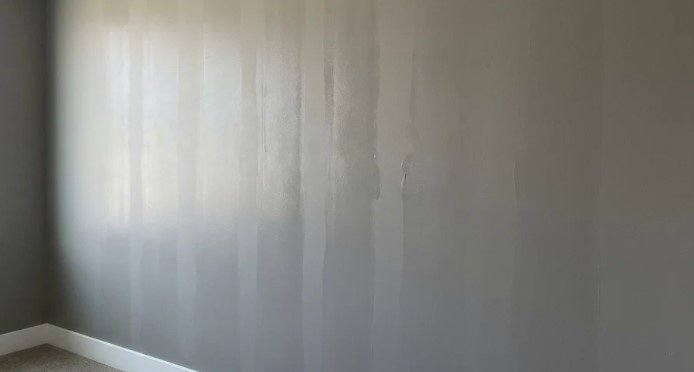

New paint usually looks streaky because the coats went on too thin, the surface underneath soaked it up unevenly, the paint dried too fast, a glossy old finish wouldn’t let it grip, or light is hitting the wall from the side. Bad paint is rarely the problem.
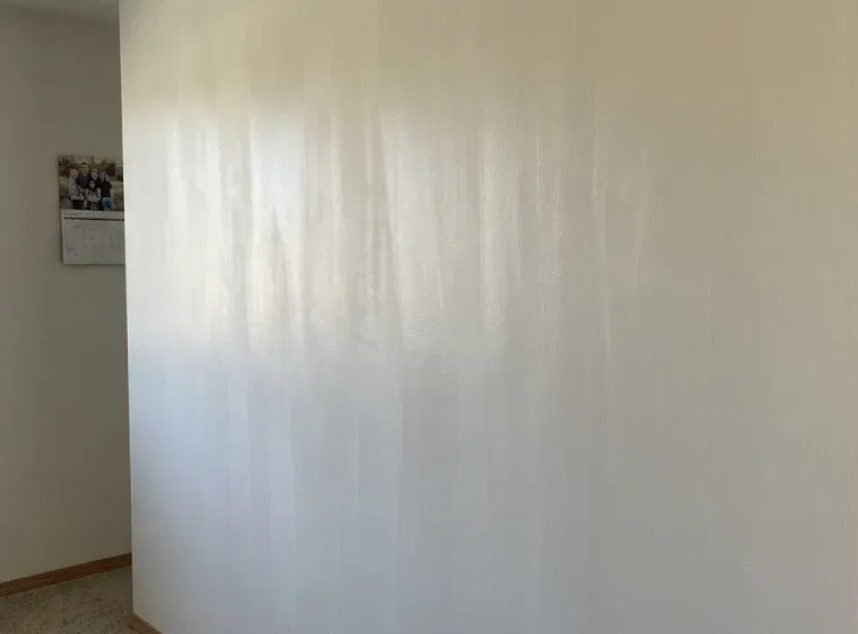
Why does my new paint look streaky on one wall and fine on the next? Often it comes down to the light you’re looking in. Close the blinds, switch on the ceiling light and look again. Then open them and look from the side. Streaks that show both ways are in the paint film itself. Streaks that only appear when sun skims the wall are mostly about sheen and how the paint was rolled.
Streaky Paint After the Second Coat Means It Went On Too Thin
When the old color shows through in faint bands, the paint was stretched too far. This happens most when going lighter over darker, like a soft white over tan or gray. A roller that isn’t reloaded often enough leaves stripes wherever the nap ran dry. A tinted primer under the first coat, or simply loading the roller more often, solves most of it. This is the one cause where an extra coat actually helps.
Patchy Paint Over Fresh Joint Compound Comes From Uneven Soaking
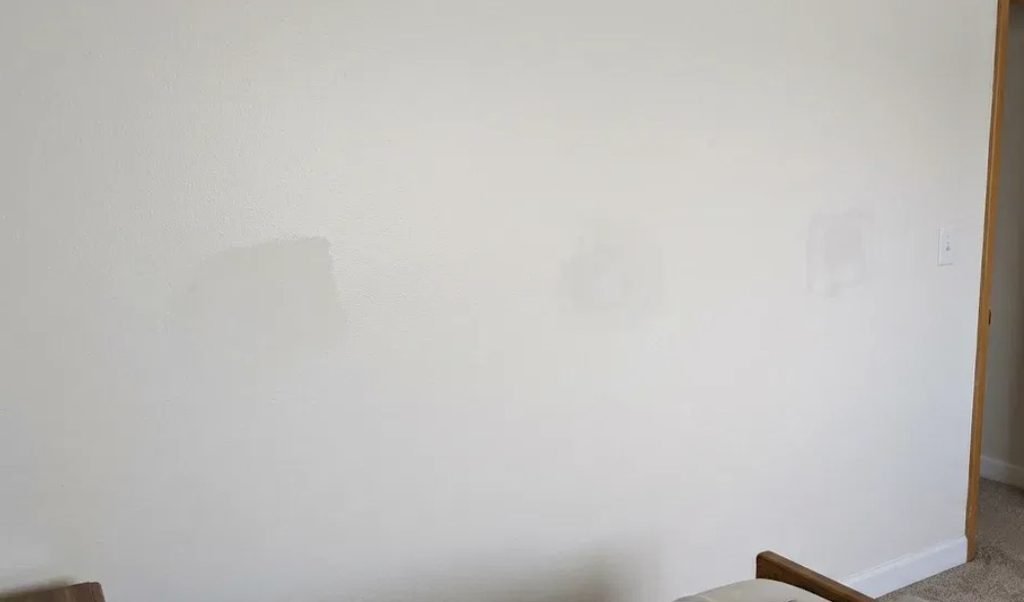
Patchy paint on new drywall and on fresh repairs comes from the same thing: joint compound drinks paint at a different rate than the painted surface around it. Roll straight over a patch, and that spot dries flatter and duller than everything else, a look painters call flashing.
Even after painting two coats, one family in Murray could still point out every spot where a TV mount and a pair of shelf brackets had come off their bedroom wall. They’d patched and painted it themselves over a weekend. Their paint was fine. The patches had never been primed, and they were smooth while the rest of the wall had a light orange peel texture. We sanded the patches flush, rolled a thin texture over them to match the wall, sealed each one with a primer made for new drywall, and then repainted the full wall in one session.
Paint Drying Too Fast in Dry Weather Leaves Lap Marks
Salt Lake Valley air is dry for most of the year. When the edge of one rolled section dries before the next section meets it, the overlap gets a double layer and shows as a stripe, called a lap mark. I keep a wet edge by finishing one wall at a time in narrow top-to-bottom passes. In the driest stretches, I add a paint conditioner that slows the drying down.
Paint Streaks in Afternoon Light Show What the Ceiling Light Hides
Light that grazes a wall turns tiny ridges and sheen changes into long shadows. A wall can look perfect at noon and striped by dinnertime.
Around four o’clock, sun from a side window swings across one wall in a Bountiful home, and that was the only time the owners noticed anything wrong. In that low sun, long vertical bands ran from floor to ceiling. It had been rolled in sections on a hot, dry day in August 2025, and each pass had started to set up before the next one reached it. We knocked down the ridges with light sanding, then rolled the full wall top to bottom without stopping, every pass in the same direction. We also went one step flatter on sheen, since flatter paint hides raking light better than eggshell.
Paint Streaks Over Glossy Paint Mean the New Coat Never Gripped
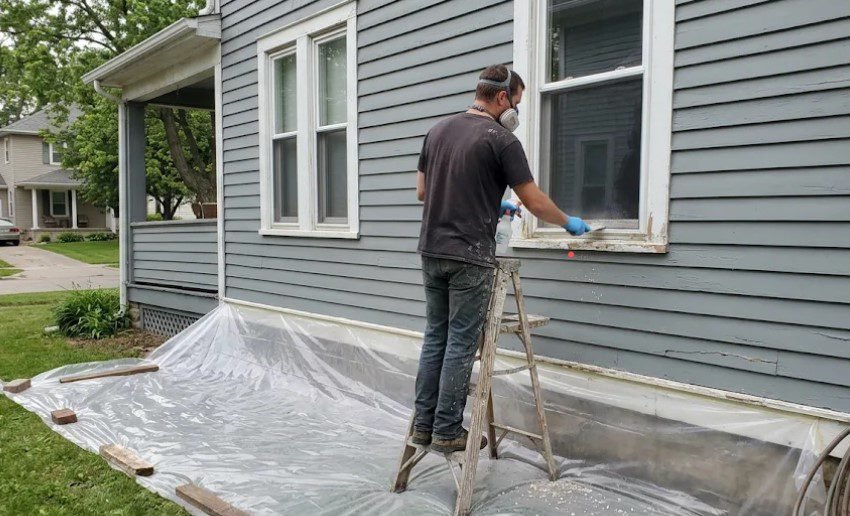
Old semi-gloss or oil paint is slick. New latex rolled over it tends to slide and pull, leaving thin stripes and spots where it never fully covered. A light scuff sanding to take the shine off, followed by a bonding primer, gives the new coat something to hold.
Kitchen walls with a film of cooking grease behave the same way, which is why washing walls first matters as much as sanding the gloss.
A Real Fix Covers the Whole Wall, Not Just the Bad Spots
Touching up a streak almost always creates a new one, because the touch-up dries to a slightly different sheen than the paint around it. Fix the cause first, whether that means priming patches, dulling gloss or slowing the drying. Then repaint the entire wall in one session, stopping only where it meets another wall or trim. That’s how we handle interior wall repaints.
FAQ
Can cheap paint cause the problem?
It can make things worse. Lower-cost paint usually carries less pigment, so it hides the old color poorly and needs more coats. Still, most uneven walls I see were caused by how the paint went on, not by the can.
Do I need to prime a wall that’s already painted?
Not always. A clean, sound wall in a similar color with a dull finish can take paint directly. Prime when you’re covering repairs, stains, a much darker color or a shiny old finish.
Does paint look different once it hardens?
A little. Sheen can even out slightly as paint hardens, so give fresh walls some time before judging them. Real roller lines and thin spots stay put, though, and won’t disappear on their own.
What roller should I use on textured walls?
Use a thicker nap than you would on smooth walls so the paint reaches into every bump. A thin nap skips over texture and leaves tiny bare points that read as a speckled, uneven finish.
Why do the edges look different from the middle of the wall?
Edges are usually brushed while the middle is rolled, and the two leave different textures. Rolling as close to corners and trim as you can, right after brushing while the edge is still wet, blends them together.
Before You Buy Another Gallon
Look at the wall in two kinds of light, decide whether the streaks are in the color, the sheen or the surface, and fix that first. If you’d like a second opinion, schedule a walkthrough and we’ll pin down which cause you’re dealing with.